
Benefits of Water Softening
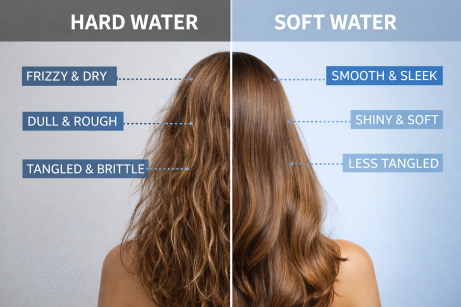
Hair
Reduced mineral build-up allows shampoos to rinse more effectively, leaving hair smoother, shinier, and easier to manage while minimising scalp dryness and irritation
Skin
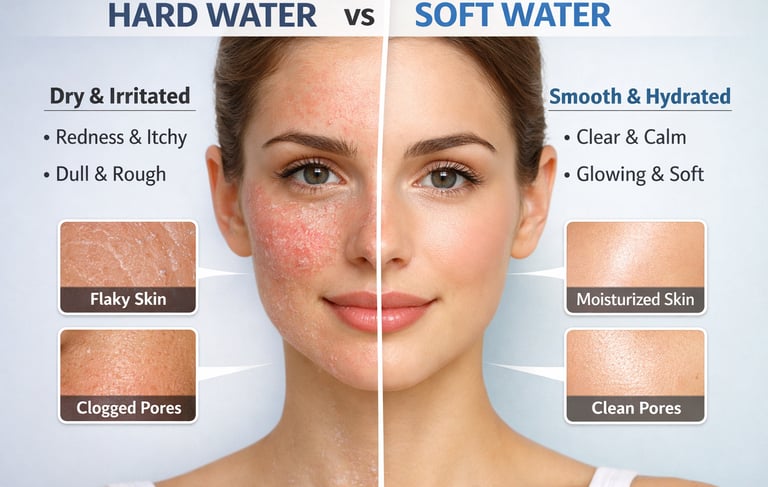
Hard water can have a negative effect on skin because its high mineral content leaves residue that strips away natural oils and disrupts the skin’s protective barrier. This often leads to dryness, irritation, itchiness, and redness, and can worsen conditions such as eczema or acne. Soap and cleansers also rinse off less effectively in hard water, leaving buildup on the skin that makes it feel tight, dull, and less hydrated.
Washing Machines
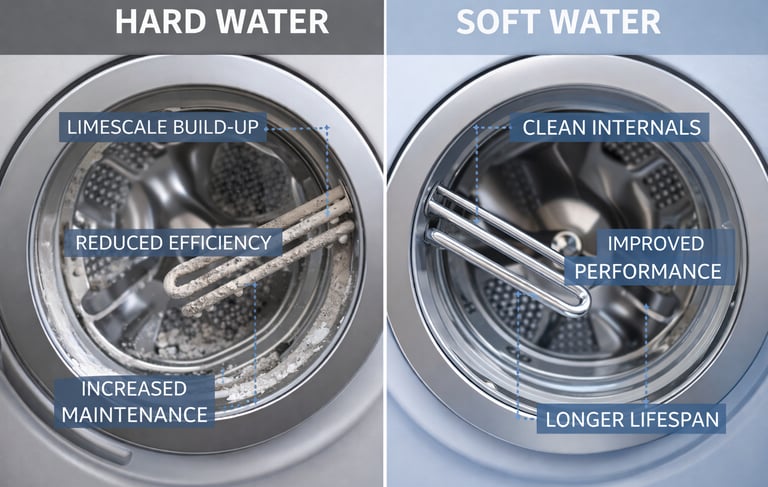
Hard water negatively affects washing machine performance by causing limescale buildup on heating elements and internal components, which reduces heating efficiency and increases energy use. Over time, this buildup can cause unpleasant odours, more frequent maintenance, and a shorter lifespan for the washing machine.
Radiators
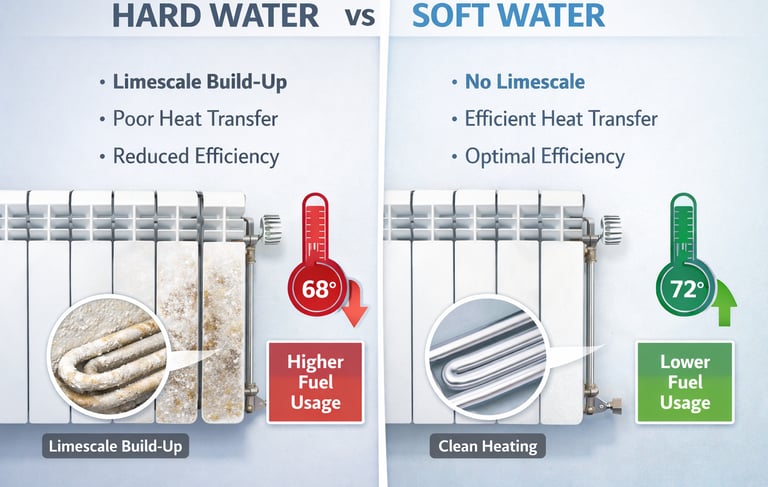
Hard water can significantly reduce radiator efficiency because its high mineral content leads to limescale buildup inside the system. This buildup acts as an insulating layer, restricting water flow and hindering heat transfer, which means radiators take longer to warm up and produce less heat. As a result, more energy is required to maintain comfortable temperatures, increasing fuel consumption, running costs, and wear on the heating system.
Showerheads
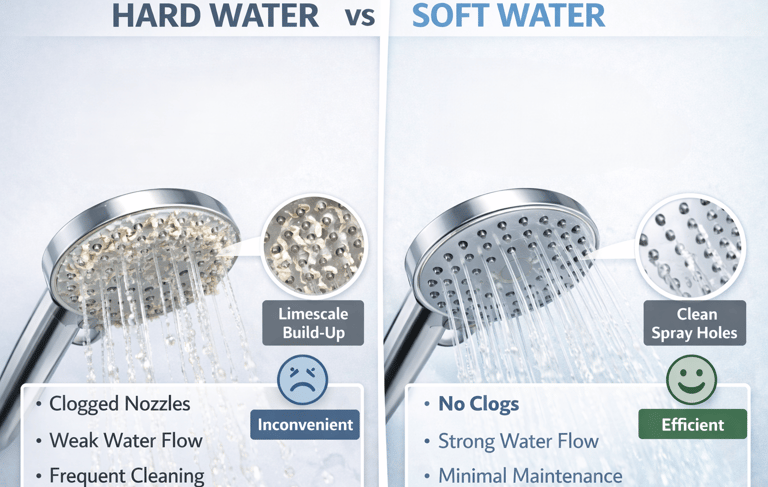
Hard water contains high levels of minerals like calcium and magnesium, which can build up inside shower heads, clog spray holes, reduce water pressure, and require frequent cleaning, making showers less convenient and less efficient.
Chrome/Stainless Steel Finishes
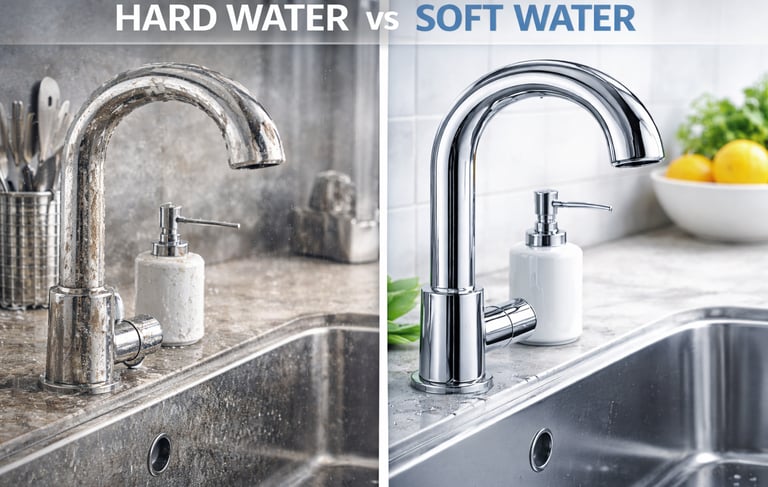
Hard water can dull the appearance of kitchen chrome and stainless steel finishes by leaving behind mineral deposits that form white spots, streaks, and stubborn limescale buildup. Over time, these deposits can make surfaces look cloudy, reduce their shine, and require frequent cleaning with stronger products, which may gradually damage the finish. This not only increases maintenance effort but also detracts from the sleek, polished look expected of high-quality kitchen fixtures.
Help
Questions? Reach out anytime for support.
Contact
Stay Updated
info@rawater.co.uk
© 2026. All rights reserved.
Learn More